Have you ever seen someone use the word “knave” in a text message, online discussion, game chat, or social media comment and wondered what it means?
You’re not alone.
While knave isn’t a modern texting abbreviation like LOL or BRB, it still appears frequently in online conversations, memes, fantasy games, historical discussions, literature communities, and even playful insults on social media.
Updated for 2026, this guide explains the meaning of knave, its origins, how people use it today, common misunderstandings, and real examples from modern online conversations.
What Does Knave Mean?
The word knave traditionally refers to a dishonest, deceitful, or untrustworthy man.
Simple Definition
Knave = A dishonest person, trickster, rogue, or someone who cannot be trusted.
In modern usage, the term is often:
- Playful
- Humorous
- Dramatic
- Literary
- Old-fashioned
People rarely use it as a serious insult today. Instead, it often appears jokingly among friends or in fantasy-themed conversations.
Quick Meaning
| Word | Meaning |
| Knave | Dishonest person |
| Knave | Trickster |
Origin of the Word Knave
The word knave comes from Old English.
Originally, it simply meant:
“Boy” or “servant.”
Over hundreds of years, the meaning evolved. By the Middle Ages, the term began referring to someone considered dishonest or morally questionable.
Writers such as William Shakespeare frequently used the word in their plays to describe villains, tricksters, and unreliable characters.
Because of its historical roots, the word still sounds dramatic and theatrical today.
Historical Evolution
- Old English: Boy or servant
- Middle English: Male worker
- Later English: Dishonest man
- Modern English: Rogue or trickster
How Is Knave Used Today?
In 2026, most people use knave in one of four ways:
1. Playful Insult
Friends sometimes jokingly call each other a knave after a prank or harmless trick.
Example:
Person A: “I ate the last slice of pizza.”
Person B: “You knave!”
The speaker usually isn’t angry. They’re being playful.
2. Fantasy and Gaming Communities
Fantasy games, RPGs, and medieval-themed stories often use the word.
Example:
“The knave stole the king’s treasure and disappeared into the forest.”
Popular fantasy communities enjoy old-fashioned vocabulary because it creates a medieval atmosphere.
3. Literature Discussions
Readers discussing classic books may encounter the word regularly.
Example:
“The main character appears noble, but he turns out to be a knave.”
4. Humorous Social Media Posts
Some users enjoy sounding dramatic online.
Example:
“My roommate finished all my snacks. What a knave.”
This usage is intentionally exaggerated for comedic effect.
Knave Meaning in Text Messages
In texting, knave usually means:
“You sneaky trickster.”
The tone is often humorous rather than hostile.
Example Texts
Friend 1:
“You forgot to tell me the movie had a sad ending.”
# Friend 2:
“You knave.”
Friend 1:
“I hid your charger.”
#Friend 2:
“Absolute knave behavior.”
#Friend 1:
“I won the game again.”
Friend 2:
“You lucky knave.”
How to Use Knave Correctly in Chat
If you want to use the word naturally, follow these tips.
Use It Playfully
Good example:
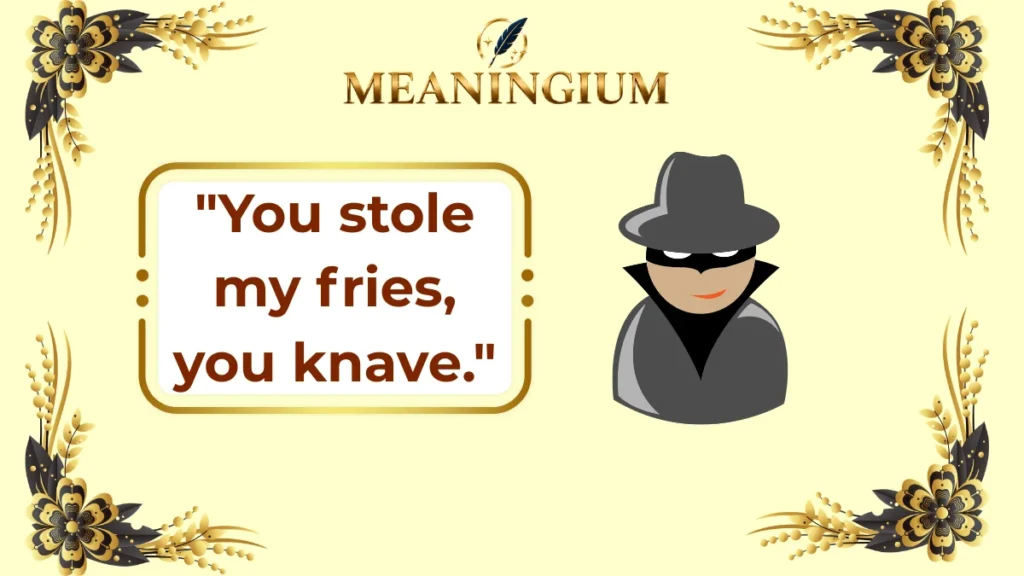
“You stole my fries, you knave.”
This sounds light-hearted.
Use It in Fantasy Contexts
Good example:
“The knave escaped before the guards arrived.”
This matches the traditional meaning.
Use It Humorously Online
Good example:
“Whoever leaked the spoilers is a knave.”
This sounds dramatic and funny.
Avoid Using It in Serious Arguments
Most people don’t use knave as a serious modern insult.
Instead of sounding threatening, it may sound theatrical or outdated.
Examples of Knave in Conversations
Example 1: Gaming Chat
P- 1: “I took all the loot.”
Player 2: “You knave!”
Player 1: “No regrets.”
Example 2: Social Media
Post:
My brother changed my Netflix profile picture again. What a knave.
Example 3: Fantasy Forum
User A:
The knight trusted the knave and paid the price.
User B:
Classic medieval mistake.
Example 4: Group Chat
Friend:
I told everyone your secret pizza spot.
You:
You treacherous knave.
Example 5: Meme Comment
Comment:
Bro finished the snacks and acted innocent. Certified knave.
Common Mistakes and Misunderstandings
Many people misunderstand the word because it isn’t commonly used in everyday speech.
Mistake #1: Thinking It Means a Knight
Because knave sounds medieval, some people confuse it with knight.
Knight = Heroic warrior
Knave = Dishonest rogue
These words have very different meanings.
Mistake #2: Assuming It’s a Modern Slang Term
Knave is not a new internet slang word.
It is an old English word that remains popular in certain online communities.
Mistake #3: Thinking It’s Always Offensive
In modern conversations, knave is often humorous.
Many people use it jokingly rather than aggressively.
Mistake #4: Using It in Professional Settings
Avoid phrases like:
“My coworker is a knave.”
Most people would find the wording strange or overly dramatic.
Knave Meaning in Social Media
The word occasionally trends on:
- X (Twitter)
- TikTok
- Discord
- Gaming forums
- Fantasy communities
Modern users often employ the word ironically.
Example
Someone steals your in-game item:
“This knave has betrayed me.”
The exaggerated language creates humor.
Related Slangs and Similar Words
If you’re interested in the knave meaning, you may also encounter these related terms.
Rogue
A mischievous or dishonest person.
Scoundrel
Someone who behaves badly or unfairly.
Rascal
A playful troublemaker.
Trickster
A person who enjoys deceiving others.
Villain
An evil or morally bad character.
Mischief-Maker
Someone who enjoys causing harmless trouble.
Knave vs Rogue vs Scoundrel
| Word | Meaning | Tone |
| Knave | Dishonest person | Old-fashioned |
| Rogue | Clever troublemaker | Adventurous |
| Scoundrel | Bad person | Stronger insult |
| Rascal | Playful troublemaker | Friendly |
| Trickster | Person who deceives | Neutral |
Among these, rascal is usually the friendliest term.
When Should You Use Knave?
Use the word when:
When joking with friends: It works great for lighthearted teasing over text or in group chats.
During fantasy story discussions: RPG gamers and world-builders frequently use it to set a medieval mood.
While writing creatively: Authors can use it to describe a specific type of historic or fictional character.
For posting humorous comments: It helps make online memes or social media reactions sound funnier.
When talking about classic literature: You will often need it when analyzing historical plays or Shakespearean works.
When You Should Avoid Using It
On the other hand, there are places where this vocabulary will completely ruin the tone. You should definitely avoid it in the following cases:
For communicating with your boss: Professional workplace discussions demand modern and formal language.
When discussing sensitive issues: Serious matters always require straightforward clarity instead of old-fashioned vocabulary.
While writing business emails: Sending this word to clients will make your message look highly unprofessional.
During serious conflicts: Using dramatic terms during a real argument can make you sound mocking or insincere.
Why Has Knave Become Popular Again?
Several trends have helped revive the word online:
Fantasy Gaming
Games featuring medieval settings expose players to older vocabulary.
Historical Content
History-focused YouTube videos and social media creators frequently use classic language.
Meme Culture
People enjoy using exaggerated old-fashioned insults for comedic effect.
Book Communities
Fantasy and classic literature readers regularly encounter the term.
Because of these influences, younger internet users are more familiar with the word today than they were a decade ago.
Frequently Asked Questions (FAQs)
1. What is the exact knave meaning?
A knave is a dishonest, deceitful, or untrustworthy person, often used playfully today.
2. Is knave a bad word?
Not usually. Modern usage is often humorous or lighthearted.
3. Is knave internet slang?
No. It is an old English word that still appears in modern online conversations.
4. What is the difference between a knave and a knight?
A knight is typically honorable, while a knave is dishonest or deceitful.
5. Can I use knave in text messages?
Yes. Many people use it jokingly with friends.
6. Is knave offensive?
It can be mildly insulting, but it is usually viewed as playful and old-fashioned.
7. Why do gamers use the word knave?
Fantasy and medieval games often include historical vocabulary, making the term common in gaming communities.
8. Is knave still used in 2026?
Yes. While uncommon in everyday speech, it remains popular in memes, gaming, fantasy discussions, and humorous social media posts.
Final Thoughts on Knave Meaning
The knave meaning is simple: it refers to a dishonest, deceitful, or tricky person.
Today, most people use knave humorously rather than as a serious insult.
As language evolves, older words frequently find new life online and knave is a perfect example of that trend.
Understanding its meaning in 2026 helps you recognize the humor, context, and intent behind its use.