Updated for 2026
Have you ever felt uncomfortable when someone else got attention, success, or something you wanted? That feeling is often called jealousy.
While jealousy is a common human emotion, many people misunderstand its meaning, causes, and effects.
In today’s world of social media, texting, online relationships, and constant comparison, understanding the jealousy meaning is more important than ever.
Whether you’re seeing the word in a conversation, reading it online, or trying to understand your own emotions, this guide explains everything in simple language.
What Does Jealousy Mean?
Jealousy is an emotional response that occurs when a person feels threatened by the possibility of losing something valuable, such as:
- A relationship
- Attention
- Success
- Recognition
- Possessions
- Opportunities
In simple words, jealousy happens when you fear that someone else might take away something important to you.
Simple Definition of Jealousy
Jealousy means feeling worried, insecure, or upset because you think someone else may take something you value.
Example
“I felt jealous when my best friend started spending more time with someone else.”
In this example, the person fears losing their friend’s attention and companionship.
The Origin of the Word Jealousy
The word jealousy has been used in English for centuries. It comes from the Old French word jalousie, which referred to suspicion, protectiveness, or concern about losing someone’s affection.
Over time, the meaning evolved into the emotional feeling we recognize today.
Today, jealousy is commonly discussed in:
- Relationships
- Friendships
- Family dynamics
- Workplace situations
- Social media interactions
Jealousy Meaning in Modern Life
In 2026, jealousy appears in many situations beyond romantic relationships.
Social Media Jealousy
Many people compare themselves to others online.
Examples include:
- Seeing someone else’s vacation photos
- Watching influencers show luxury lifestyles
- Comparing achievements on LinkedIn
- Feeling left out of group activities
Example:
“Everyone seems happier than me on Instagram, and honestly, it makes me jealous.”
Friendship Jealousy
Jealousy can occur when friends become closer to someone else.
Example:
“I got jealous when my friend started hanging out with a new group.”
Workplace Jealousy
Employees sometimes feel jealous when coworkers receive promotions or recognition.
Example:
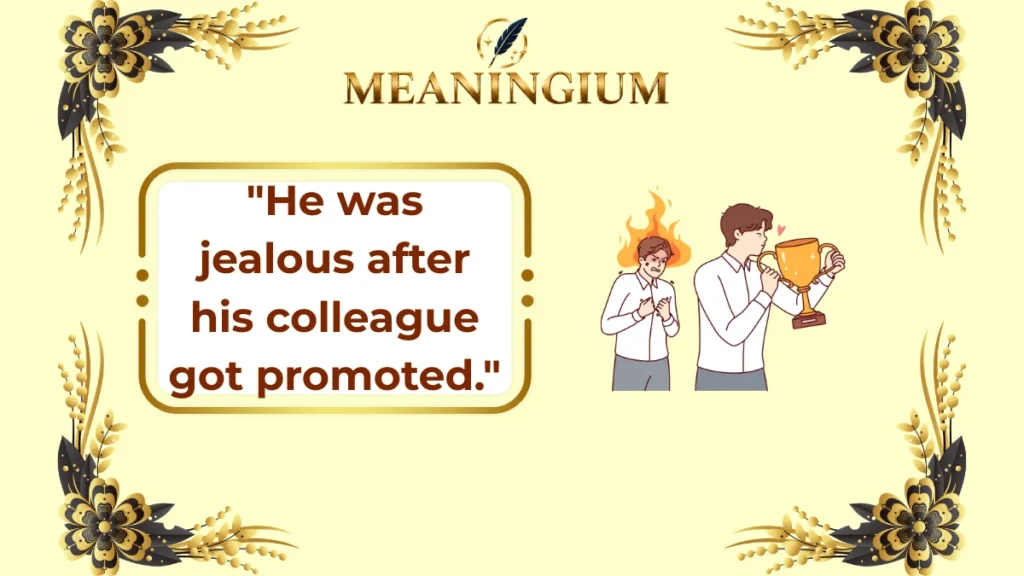
“He was jealous after his colleague got promoted.”
Jealousy vs Envy: What’s the Difference?
Many people use these words interchangeably, but they are not exactly the same.
Jealousy
You fear losing something you already have.
Example:
“I’m jealous because my partner spends more time with someone else.”
Envy
You want something another person has.
Example:
“I envy her new car.”
Quick Comparison
| Jealousy | Envy |
|---|---|
| Fear of losing something | Desire to gain something |
| Often involves relationships | Often involves possessions or achievements |
| Linked to insecurity | Linked to comparison |
Understanding this difference helps you use the correct word in conversations.
How to Use Jealousy in Texts and Chats
The word jealousy is frequently used in messaging apps, social media comments, and online discussions.
Common Text Examples
Example 1
Person A: “Sarah got the promotion.”
Person B: “Not gonna lie, I’m feeling a little jealousy right now.”
Example 2
Friend 1: “We’re going on vacation next week.”
Friend 2: “You’re making me jealous!”
Example 3
Person A: “My boyfriend keeps talking about his coworker.”
Person B: “Sounds like jealousy might be kicking in.”
Signs That Someone Is Feeling Jealous
Jealousy doesn’t always appear openly.
Some common signs include:
Emotional Signs
- Insecurity
- Anxiety
- Fear
- Sadness
- Anger
Behavioral Signs
- Constant comparison
- Seeking reassurance
- Becoming possessive
- Criticizing others
- Overthinking situations
Example
Someone repeatedly checking their partner’s social media may be experiencing jealousy.
Real-Life Examples of Jealousy
Let’s look at some everyday situations.
Example 1: Relationship Jealousy
Emma notices her boyfriend likes another girl’s posts frequently.
She starts wondering:
- Does he like her?
- Am I not enough?
- Should I be worried?
This is a classic example of jealousy.
Example 2: Academic Jealousy
A student studies hard but sees another student receive higher grades.
They feel upset and compare themselves constantly.
Example 3: Social Media Jealousy
A person sees friends attending a party they weren’t invited to.
They feel left out and jealous.
Why Do People Feel Jealous?
Jealousy usually has deeper emotional causes.
1. Fear of Loss
People naturally want to protect important relationships and opportunities.
2. Low Self-Esteem
Individuals who doubt themselves may feel jealous more often.
3. Past Experiences
Previous betrayals or disappointments can trigger jealousy.
4. Comparison Culture
Social media makes comparison easier than ever.
People often compare:
- Appearance
- Wealth
- Relationships
- Career success
- Lifestyle
Is Jealousy Normal?
Yes.
Jealousy is a normal human emotion.
Almost everyone experiences jealousy at some point.
However, the key difference is how you respond to it.
Healthy jealousy may:
- Highlight insecurities
- Encourage communication
- Help identify personal needs
Unhealthy jealousy may:
- Damage relationships
- Create distrust
- Increase stress
- Lead to controlling behavior
Common Mistakes and Misunderstandings About Jealousy
Mistake 1: Thinking Jealousy Means Love
Many people believe:
“If they’re jealous, they must love me.”
Not necessarily.
Excessive jealousy can come from insecurity rather than love.
Mistake 2: Ignoring Jealous Feelings
Suppressing jealousy without addressing it often makes it stronger.
Mistake 3: Comparing Yourself Constantly
Social media highlights people’s best moments, not their full reality.
Mistake 4: Assuming Jealousy Is Always Bad
A small amount of jealousy can reveal personal concerns and help with self-awareness.
How to Deal With Jealousy Effectively
If jealousy is affecting your happiness, consider these practical strategies.
Recognize the Emotion
Ask yourself:
- Why do I feel jealous?
- What am I afraid of losing?
Avoid Constant Comparisons
Focus on your own goals rather than someone else’s achievements.
Communicate Openly
In relationships, honest conversations often reduce jealousy.
Build Confidence
Work on:
- Skills
- Hobbies
- Personal growth
- Self-esteem
Practice Gratitude
Appreciating what you already have can reduce feelings of jealousy.
Related Words and Emotions
Understanding related emotions helps expand your vocabulary.
Envy
Wanting something another person has.
Insecurity
Feeling uncertain about your value or worth.
Resentment
Feeling bitterness toward someone.
Possessiveness
Wanting excessive control over people or situations.
Admiration
Respecting someone’s success without feeling threatened.
Related Articles You Can Link Internally
To strengthen SEO and improve user engagement, link to related content such as:
- What Does Envy Mean?
- Insecurity Meaning Explained
- Self-Esteem Meaning in Psychology
- Toxic Relationship Meaning
- Emotional Intelligence Meaning
- Green-Eyed Monster Meaning
- Trust Issues Meaning
- Confidence Meaning
These internal links help readers explore connected topics and improve topical authority.
Jealousy Meaning in Social Media Culture
Social media has changed how people experience jealousy.
Common triggers include:
- Vacation pictures
- Luxury purchases
- Relationship posts
- Fitness transformations
- Career achievements
Many users compare their everyday lives to carefully edited online content.
Remember:
What people post online is often a highlight reel, not reality.
This perspective can help reduce unnecessary jealousy.
Examples of Jealousy in Everyday Conversations
Example Conversation 1
Person A: “My sister bought a new house.”
Person B: “Wow, I admit I’m a little jealous.”
Example Conversation 2
Person A: “Everyone got invited except me.”
Person B: “I’d feel jealous too.”
Example Conversation 3
Person A: “My coworker got Employee of the Month.”
Person B: “Sounds like workplace jealousy is happening.”
Example Conversation 4
Friend: “Look at their vacation photos.”
You: “They’re amazing, but honestly, I’m feeling a bit jealous.”
FAQs About Jealousy Meaning
1. What is the simple meaning of jealousy?
Jealousy is the fear of losing something important to someone else.
2. Is jealousy a positive or negative emotion?
It can be both. Mild jealousy can increase self-awareness, while excessive jealousy can damage relationships.
3. What causes jealousy?
Common causes include insecurity, fear of loss, comparison, and past experiences.
4. Is jealousy the same as envy?
No. Jealousy involves fear of losing something, while envy involves wanting what someone else has.
5. Can jealousy affect friendships?
Yes. Jealousy can occur when friends feel replaced, ignored, or compared.
6. How can I stop feeling jealous?
Focus on self-improvement, confidence, gratitude, and open communication.
7. Is jealousy normal in relationships?
Yes. Small amounts of jealousy are common, but extreme jealousy can become unhealthy.
8. Why does social media increase jealousy?
Social media encourages comparison by showing idealized versions of people’s lives.
Conclusion
Understanding the jealousy meaning helps you recognize one of the most common human emotions.
Jealousy often appears when we fear losing something valuable, whether that’s a relationship, attention, success, or opportunity.
Updated for 2026, this guide provides a clear explanation of jealousy, real-life examples, common misunderstandings, and practical strategies for handling it effectively.